31.12.22
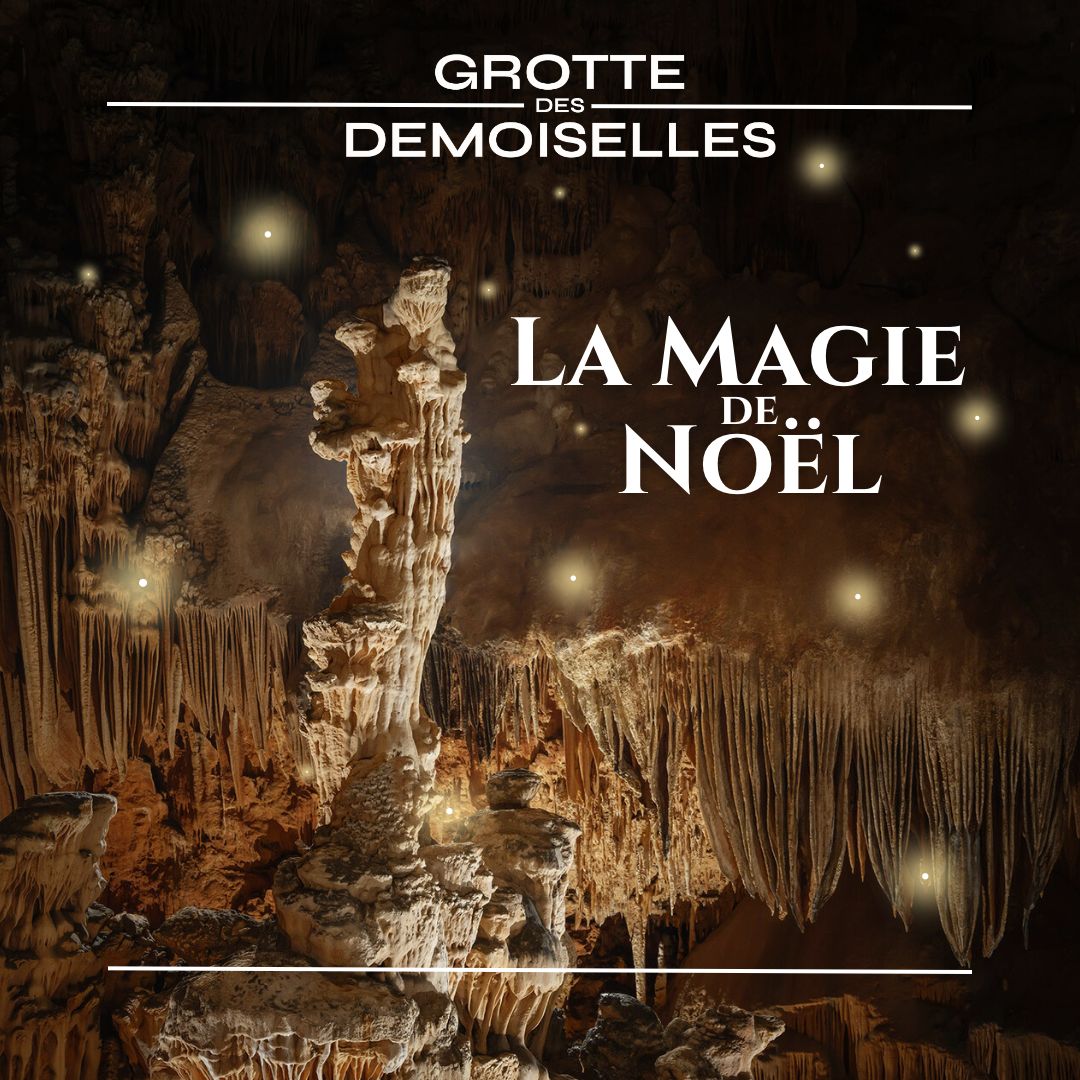
The Magic of Christmas
The Grotte des Demoiselles awakens the magic of Christmas in its Underground Cathedra ...

Share
The Grotte des Demoiselles: a major milestone in the birth of scientific speleology
In an article published by Midi Libre, Édouard-Alfred Martel is described as “the man who opened up the Earth.” This phrase aptly sums up the decisive role he played at the end of the 19th century in establishing the underground world as a field of scientific study. A methodical explorer, rigorous observer, and tireless popularizer of science, Martel is inseparable from the history of the Causses and the Cévennes, whose invisible landscapes he brought to light.
Among the caves that punctuate his career, the Grotte des Demoiselles, located in the Thaurac massif, occupies a singular place.
Martel and the Grotte des Demoiselles: a gradual exploration
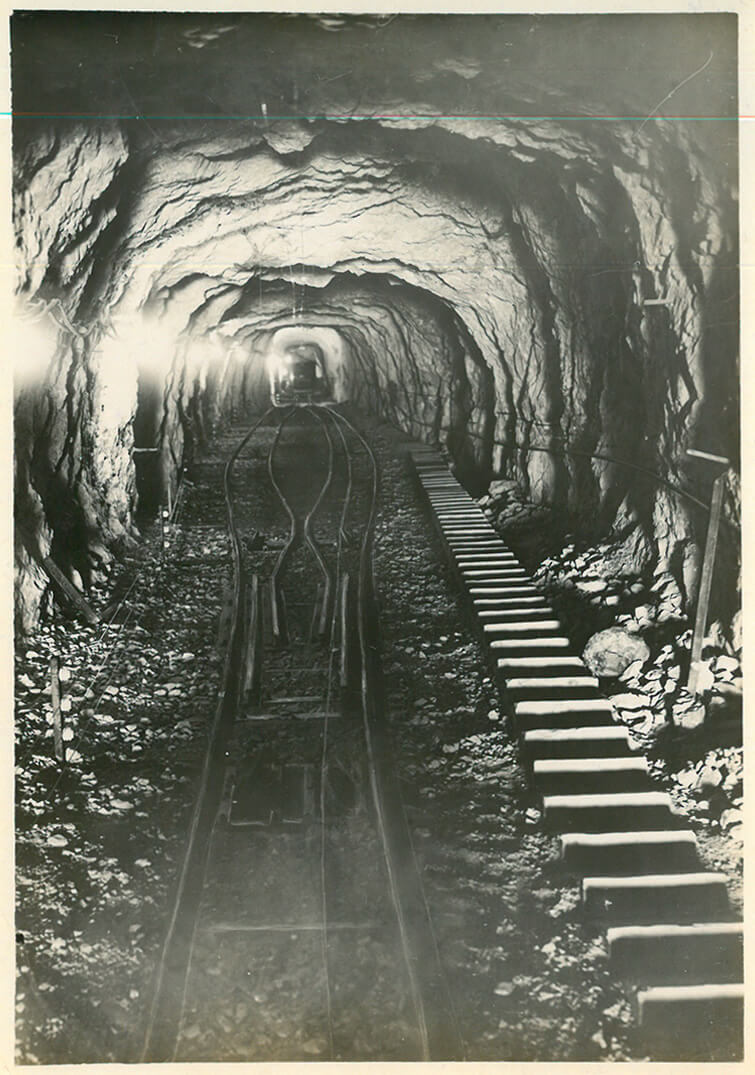
Contrary to the romantic image of a sudden discovery, the exploration of the Grotte des Demoiselles unfolded over time. Édouard-Alfred Martel carried out two major reconnaissance expeditions there in 1884 and 1889, accompanied by leading speleologists of the period: Louis Armand—later the discoverer of the Aven Armand in Lozère—Hubert Chabanon, and Gabriel Gaupillat.
These early incursions made it possible to grasp the scale of the underground network, but progress remained constrained by the technical limitations of the time. As was often the case with Martel, caution and method took precedence over recklessness.
1897: reaching the bottom of the cave
In 1897, Martel pushed his methodical exploration of the Grotte des Demoiselles further. For the first time, he reached the bottom of the cave, at a depth of approximately 90 metres.
This event marked a major turning point: the goal was no longer merely to explore, but to measure, understand, and interpret.
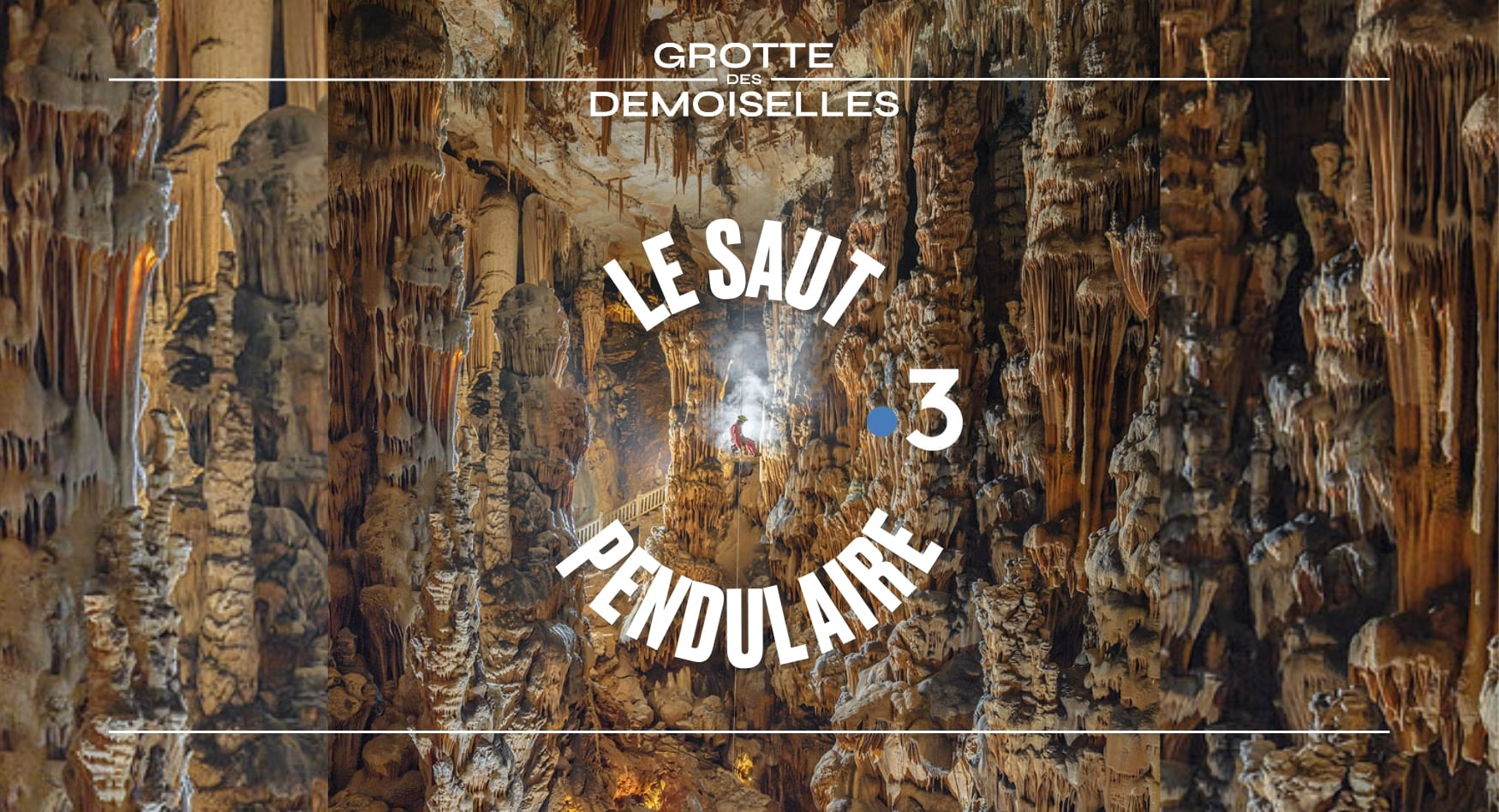
Martel then carried out the first scientific measurements of the cave. The famous chamber known as the “Cathedral” impressed him with its vast dimensions. To estimate its height, Martel resorted to a method as daring as it was ingenious: the use of a hot-air balloon—an experimental approach that vividly illustrates his scientific mindset and inventiveness.
One can easily imagine the explorer’s delight when confronted with such extraordinary volumes at a time when the underground world remained largely unknown.
A scientific reading of the underground Thaurac
The Grotte des Demoiselles must be understood within the geological context of the limestone Thaurac massif, shaped by millions of years of karstification.
The cave’s exceptional volumes, the richness of its formations, and the organization of its chambers bear witness to complex phases of underground water circulation, ancient collapses, and the slow deposition of calcite.
For Martel, such caves were true natural archives. They made it possible to read the history of erosion, climate, and landscapes on a timescale far exceeding that of human history. This approach—innovative for its time—lay at the very heart of the recognition of speleology as a scientific discipline.
From exploration to dissemination
As Midi Libre points out, Martel did not stop at exploration. He wrote, published, mapped, and shared his discoveries. In doing so, he profoundly transformed the way caves were perceived, long associated with fear and superstition.
Thanks to its scale and the quality of the observations carried out as early as the late 19th century, the Grotte des Demoiselles became a reference site. It perfectly illustrates the transition from adventure to science, from a dark and mysterious world to a shared heritage.
A living legacy
Today, the Grotte des Demoiselles remains a major site of underground heritage in southern France. It embodies the legacy of Édouard-Alfred Martel and his companions, whose work laid the foundations of modern speleology.
To visit the cave is to enter a story where geology, exploration, and scientific research intersect—a story that began more than a century ago, in the silence and darkness of the Thaurac massif.
Credits

Troa
Identité & Site Internet